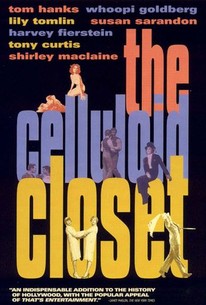
The Celluloid Closet opened my eyes not only to the complicated history of LGBTQ+ representation in film, but how the lack or kinds of representation affected society overall, in particular, people who identified as lesbian, homsexual, bisexual, transgender, etcetera. Many of the speakers in the film, ranging from screenwriters to actors to producers, pulled from their own experience in how they felt about and reacted with movies, providing the audience with memorable quotes and analysis of LGBTQ+ representation.
In one of the opening lines of the documentary, the narrator (Lily Tomlin) says the following:
“Hollywood, the great maker of myths, taught straight people what to think about gay people, and gay people, what to think about themselves. No one escaped its influence.”
(The Celluloid Closet 03:10-03:25).
As one of the first lines spoken, it sets the tone of the documentary. While there are some positive aspects the film covers, it mostly talks about the struggles to represent LGBTQ+ people, whether they are lacking from the films overall, misrepresented, or mistreated. This idea is still very much relevant today; while Hollywood representation has improved in terms of providing (some) more original, less stereotypical representation for the gay community, the films I grew up with heavily dictated what I perceived and expected of gay people.
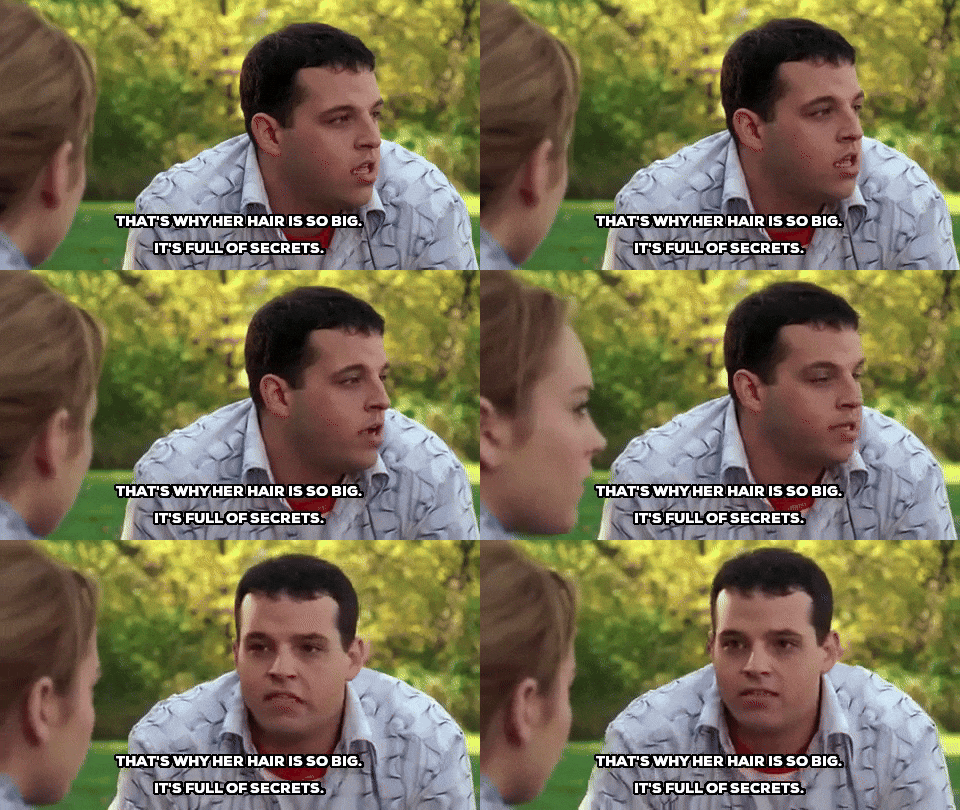
For example, Damian in Mean Girls is portrayed as a stereotypical gay male that is only best friends with girls, funny, theatrical, and gossipy. In the movie, he is used as a comical piece, one of the complaints that speakers in the documentary have about gay representation. His flamboyance and catty remarks seem to be all that makes up his character; his best friend, Janis, often comments on his gayness, most notably “almost too gay to function” (Mean Girls 2004).
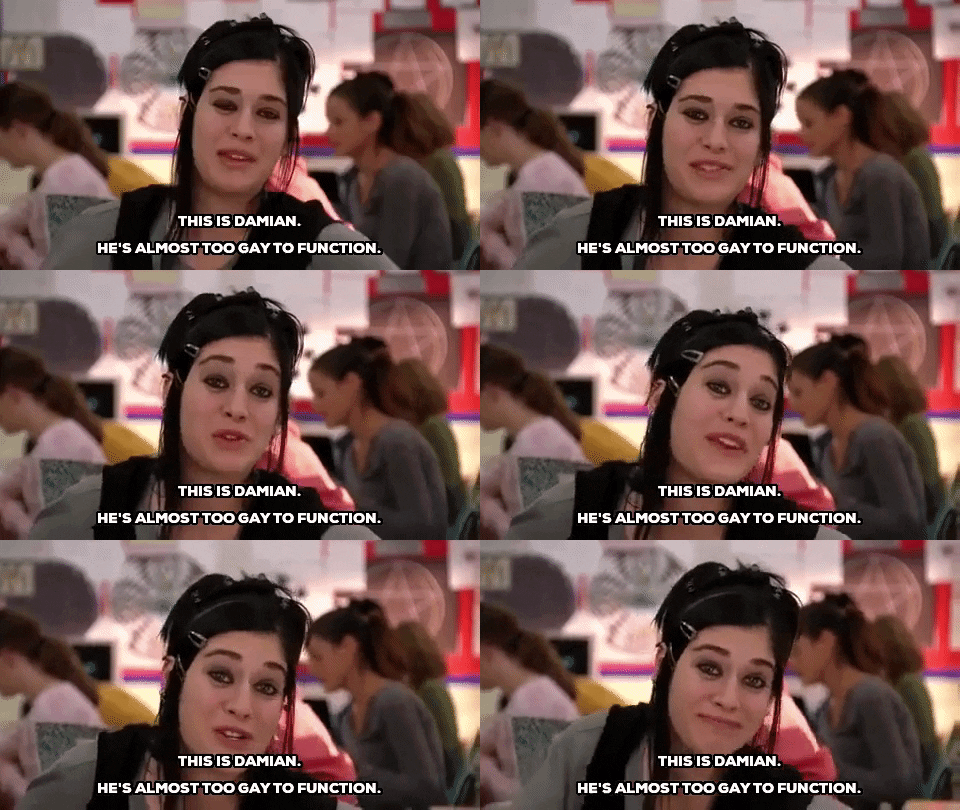
Damian has very memorable quotes and scenes rooted in comedy, but honestly, that’s about it. And, for the most part, it’s all he’s remembered for. I think people growing up watching this movie kind of expected every homosexual male to be like this: funny and flamboyant. As such an iconic film to my generation, I believe this overgeneralization of homosexual males’ personality still perpetuates people’s perceived notions of gay men today.

Source: Giphy
Source: Giphy
A second quote that also caught my attention was from the openly gay British director John Schlesinger. He states that:
“Americans are perhaps more scared of their sexuality; they’re prepared to show violence of all kinds, but when it comes to sexuality, I think America is very self-righteous, and tries to bury it as if it didn’t exist, which is silly.”
(The Celluloid Closet 1:20:00-1:20:15).
This can very much be seen in the Marvel Universe’s Avengers series. For example, many fans believe that the characters Bucky Barnes, later known as the Winter Soldier, and Captain America, whose real name is Steve Rogers, are possibly bisexual. Bucky and Steve grew up together, fought in World War II together, and even thought to have lost each other to death in two different moments. They are very close throughout their complicated relationship and timeline in the Avengers series. Many fans took their feelings as more than just a friendship.
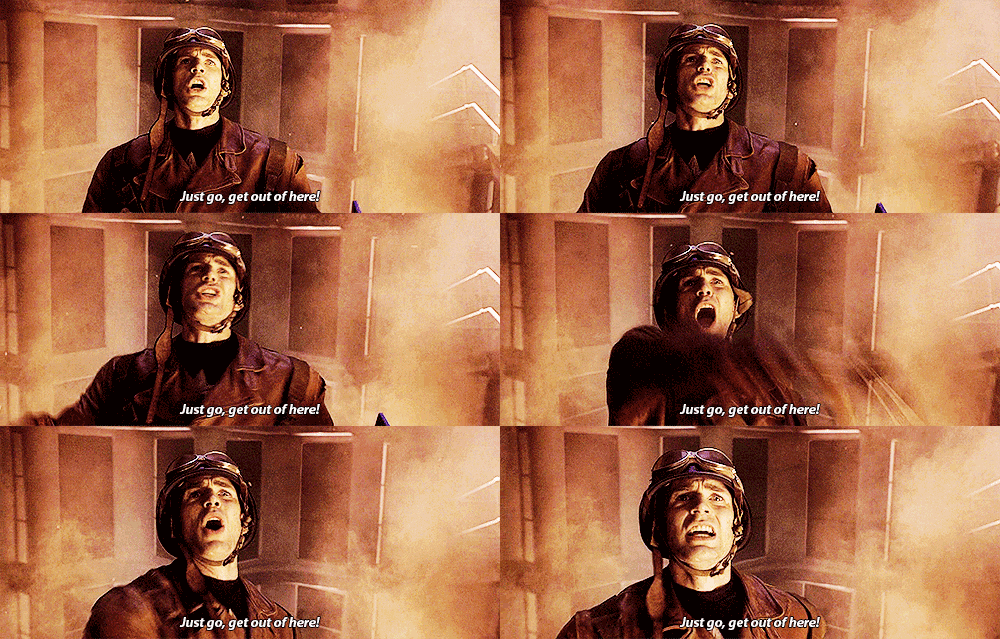
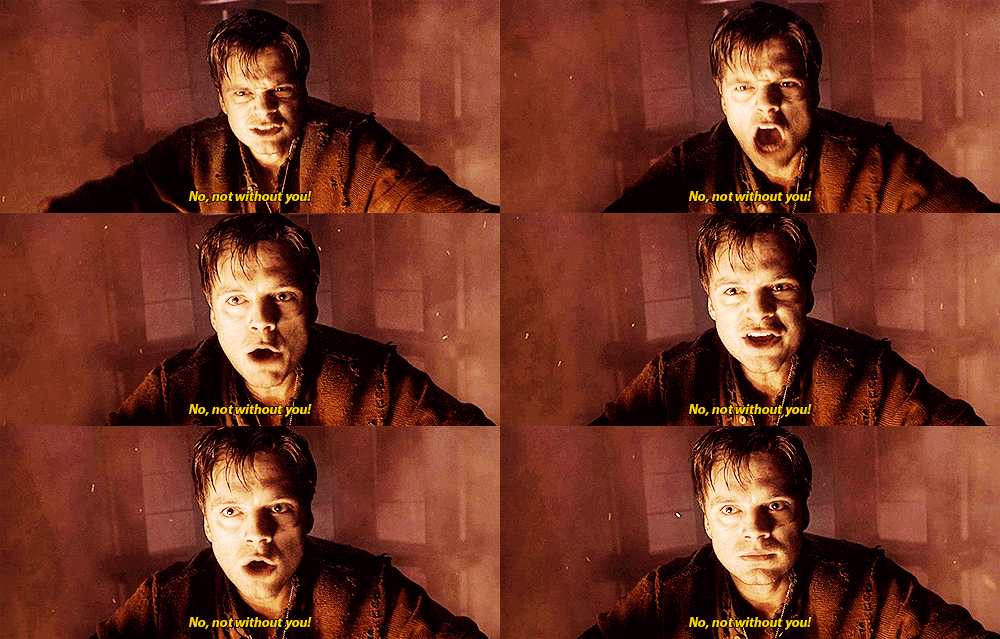
Image Source: https://lgbtgroupproject.wordpress.com/2014/08/14/theory-of-caps-bisexuality-peggy-carter-and-bucky-barnes/

Image Source: https://weheartit.com/entry/333434883
Yet, Marvel, despite how much fans point out about the two, is willing to show all sorts of violence, but not their possible bisexual identites. These two manly warriors, fighting brutally and killing on screen, could be undermined by their possible sexuality, so violence is used to mask it, or “bury” it as Schlesinger says. This can be one interpretation. However, some say that their relationship is more of a comradery and bromance between the two that was common during their time period (1930/40s), especially for brothers in arms.
There are many more aspects that the speakers in this documentary touch on. These two quotes were ones that stuck out to me the most, as I have personally experienced and noticed the situations and effects discussed.
Works Cited
The Celluloid Closet. Directed by Rob Epstein and Jeffrey Friedman, Sony Pictures Classics, 1995.
Mean Girls. Directed by Mark Waters, performances by Cary White, Mary J. Fort, Lindsay Lohan, Rachel McAdams, Tim Meadows, Amy Poehler, Ana Gasteyer, Lacey Chabert, Lizzy Caplan, Daniel Franzese, Neil Flynn, Jonathan Bennett, Amanda Seyfried, and Rosalind Wiseman. Paramount Pictures , 2004.
 Fiona's Film Blog
2 replies on “The Celluloid Closet: What is Still True Today”
I thought your example about Damian from mean girls was extremely true. Although Mean girls wasn’t made too long after Celluloid Closet. I feel like depictions of LGBTQIA+ characters are beginning to be more realistic and not created to be a tragedy or a comedic target. For example, In Olivia Wilde’s “Booksmart”, there was a coming of age scene when Amy has sex with the popular pretty mean girl for the first time. Although, the girl she was trying to court was your typical short hair skater that wore a polo shirt to prom. Turns out that girl was the straightest one in the movie and ended up hooking up with the star jock. I felt that this movie broke many stereotypes and showed that these days, anyone can be anything they want and love whoever they love.
LikeLiked by 1 person
All of your points are incredibly valid, but one thing that struck me in your post is how your example from the Marvel Cinematic Universe more accurately portrays another point in the Celluloid Closet. It’s true that the fans perceived romantic interest between Bucky Barnes and Steve Rogers, but it is never stated to be an intended path they were ever going to take. It is, however, a somewhat healthy representation of masculine friendship and vulnerability, something that film treated as gay, and thus to be replaced at any cost with violence. While it may be that they could be queer-baiting, I believe that their relationship is a step forward in healthy platonic relationships.
LikeLiked by 1 person