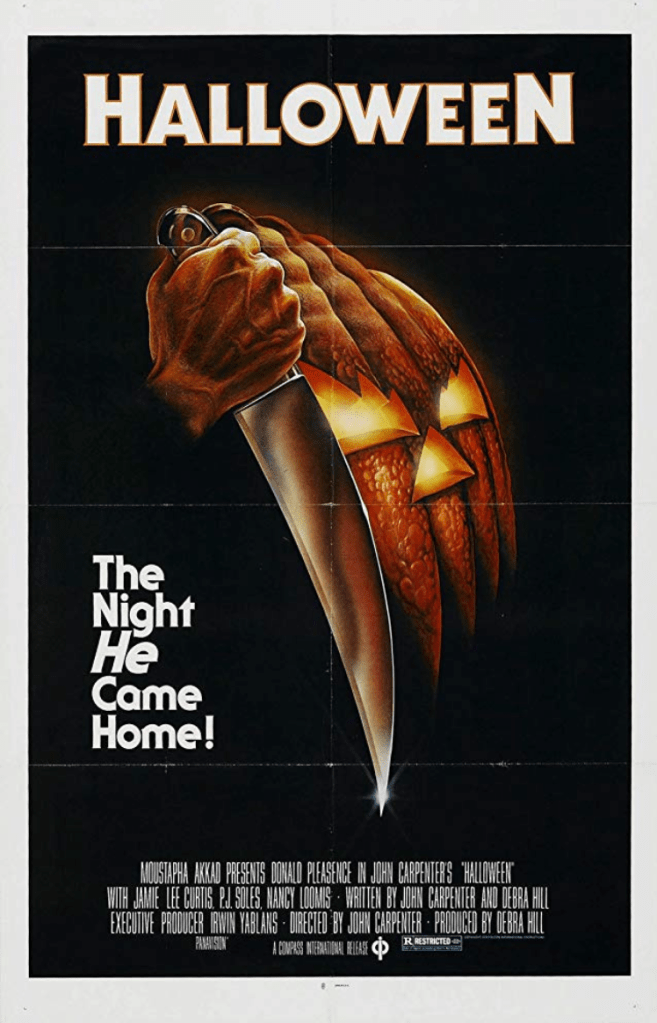
John Carpenter’s original 1978 Halloween is one of the most famous slasher films to date. The film is known for many different things, from Michael Myers iconic mask to the trope of the “Final Girl” to its thrilling piano theme. However, one aspect of the film that seems to be less valued is the sound apart from the music. In this blog post, I am going to include dialogue with sound.
Following Myers breaking out of the institution and doctor Loomis trying to track him down, the audience is introduced to another one of the main characters, Laurie. In one shot, she is sitting in the back of the classroom as her teacher seems to ramble on about a random subject off-screen. However, the subject isn’t random at all: it is about fate. As the teacher continues to vehemently talk about fate, the shot zooms in on Laurie, who then looks out the school window to see Myers standing next to his car:
The teacher says that “You see, fate caught up with several lives here,” which can be seen as a foreshadowing of the multiple deaths to come in the film (Halloween 15:52-15:57). This tense moment also addresses Laurie, or specifically, her fate to face Myers; “no matter what course of action” Laurie would take, her own “day of reckoning” would come (Halloween 15:58-16:08).
The foreshadowing itself by using the teacher’s off-screen dialogue about fate adds to the unsettling mood of the movie. This scene almost feels like a prologue to one Shakespeare’s tragedies; by having the speaker off-screen, it gives more of a looming “prophecy” tension to the scene, which makes the audience more tense and apprehensive about not only the movie in general, but Laurie’s “fate.” This can especially be seen in the teacher’s last lines, where she describes how “In Samuel’s writing, fate is immovable, like a mountain; it stands when man passes away. Fate never changes” (Halloween 16:45-16:53). These last off-screen lines linger over the viewer’s head, creating an unsettling effect as Laurie looks outside again only to see that Myers has disappeared.
Halloween also exhibits the use of diegetic sound, and in the following scene in particular, diegetic music. Later in the day, Laurie gets picked up by her friend Annie. As they drive along, smoking weed, the song “(Don’t Fear) The Reaper” by the band Blue Öyster Cult plays in the background. Laurie swears that she saw a man stalking them on their walk home earlier while Annie teases her about it. Little do they know, Myers is right behind them in a station wagon.
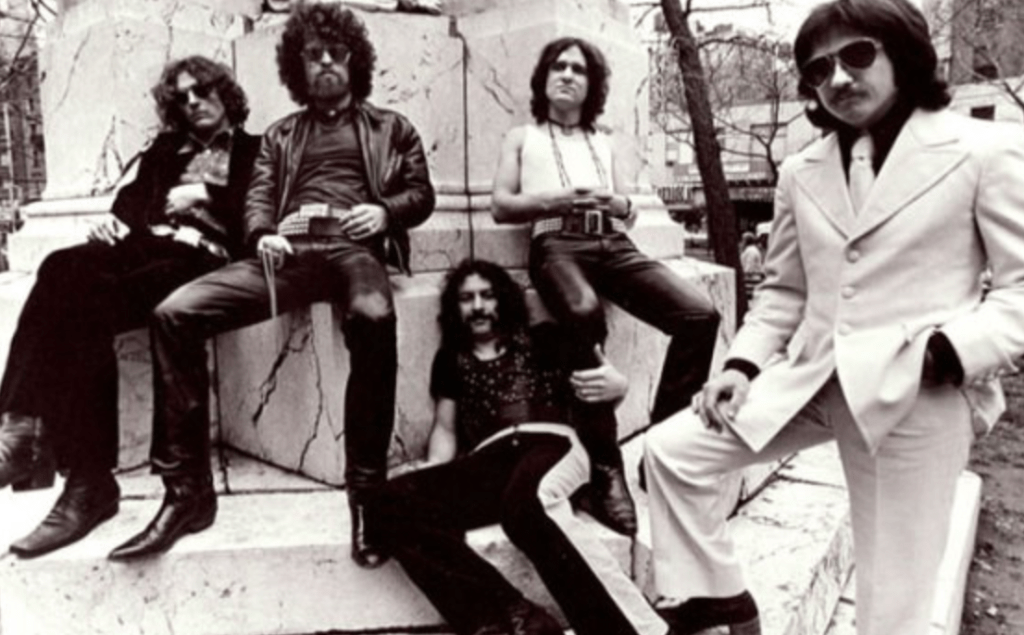
There are two potential uses of this song within this scene. One use is that this song was/is a stoner “anthem,” so in the moment, the calm tune contributes to the surface-level stoner atmosphere of the scene. However, if one listens to the lyrics, the relevance to the movie becomes more evident. The song opens up with the following verses:
“All our times have come
Here but now they’re gone
Seasons don’t fear the reaper
Nor do the wind, the sun or the rain, we can be like they are
Come on baby, don’t fear the reaper
Baby take my hand, don’t fear the reaper
We’ll be able to fly, don’t fear the reaper
Baby I’m your man”
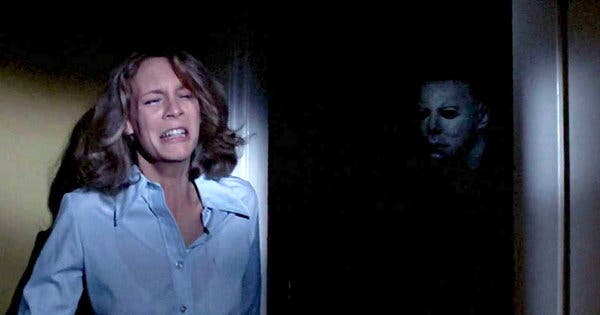
The song discusses how death comes for all at one point, so it’s irrational to fear it, or “the reaper.” The verse, “All our times have come,” is explicitly talking about death, and eerily foreshadows the following deaths in the movie. In the meantime, Annie and Laurie’s own reaper, Michael Myers, trails behind them as the song continues. Here, the song not only becomes a tool for foreshadowing, but for heightening the suspenseful tone of the film as well as disturbing mood for the audience.
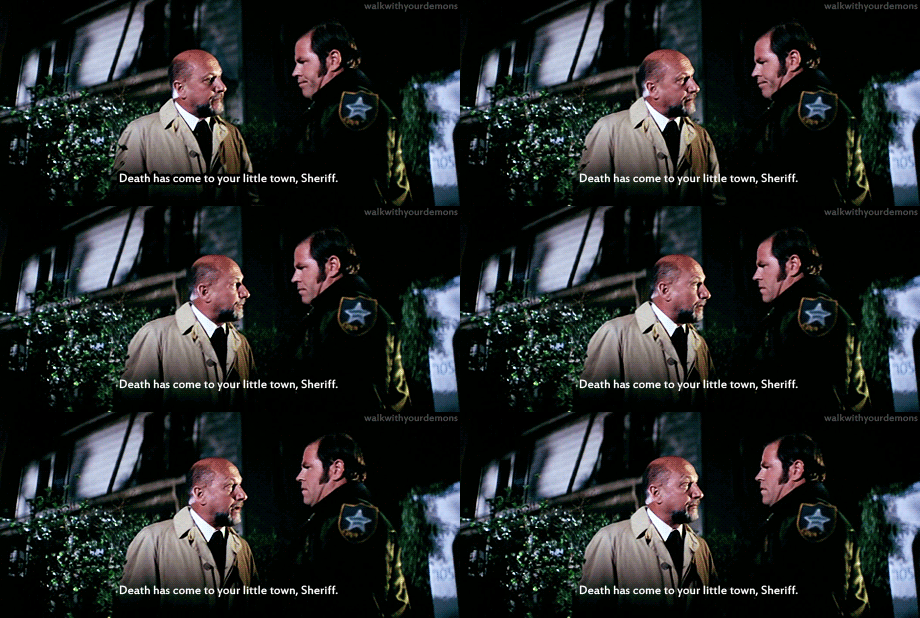
The director of the film, John Carpenter, made no mistake in choosing this particular song. In an interview for an article in The New York Times, Carpenter claimed that “I thought the song was unbelievable,” and that “We could have played against what was going on with a happy song, but we chose that one. The thing is cinematic all the way.” Here, Carpenter acknowledges that the song was set to match the deathly and suspenseful tone of the movie. He also notes how the song itself is “cinematic,” adding onto the significant weight it carries within this scene.
Additionally, to continue on more of a literary route, the use of “(Don’t Fear) The Reaper” heightens the sense of dramatic irony in the film; by now, the viewer has registered that Myers will try to kill the two girls. While Laurie isn’t wholly oblivious to Myers, in this scene she is, and both girls are unaware of the danger they are in. This song only adds onto this knowledge of the viewer, emphasizing the girls’ doom. In turn, the panic, anxiety or suspense the viewer is experiencing is elevated.
Both uses of sound—off-screen dialogue and diegetic sound/music—contribute to some form of foreshadowing or dramatic irony, which intensifies the mood and emotions viewers experience during a horror movie. This is just one of the reasons why Halloween was (and still is) such a successful horror film that still serves as a foundation and icon for others.
Worked Cited
Halloween. Directed by John Carpenter, performances by Jamie Lee Curtis, Donald Pleasence, Tony Moran, P.J. Soles, and Nancy Kyes. Compass International Pictures, 1978.
 Fiona's Film Blog
One reply on “Listen a Little More Carefully: Halloween 1978”
I didn’t quiet pay attention to the dialogue during the classroom scene as much as I should have been. I also see many of the similarities between Hereditary and Halloween. I also saw similarities with Midsommar as well. One in particular, all the movies shared many shots that included huge foreshadowing during music scenes. Much like in the Halloween classroom scene, Ari Aster’s Midsommar included a segment where the main character takes psychedelic drugs and uses music to almost try and distract the the viewer from the truth. The other people around the main character are laughing and making fun of her which foreshadows the downfall of her “true” friends.
LikeLike